
Planning a trek is exciting, but carrying the right trekking essentials can make the difference between a comfortable adventure and a challenging one. Whether you’re heading for a short weekend hike or a demanding Himalayan trail, proper preparation helps you stay safe, energized, and ready for changing conditions.
In this guide, we’ll cover 15 must-have trekking essentials that every beginner and experienced trekker should consider packing before hitting the trail.
15 Trekking Essentials Every Trekker Should Carry
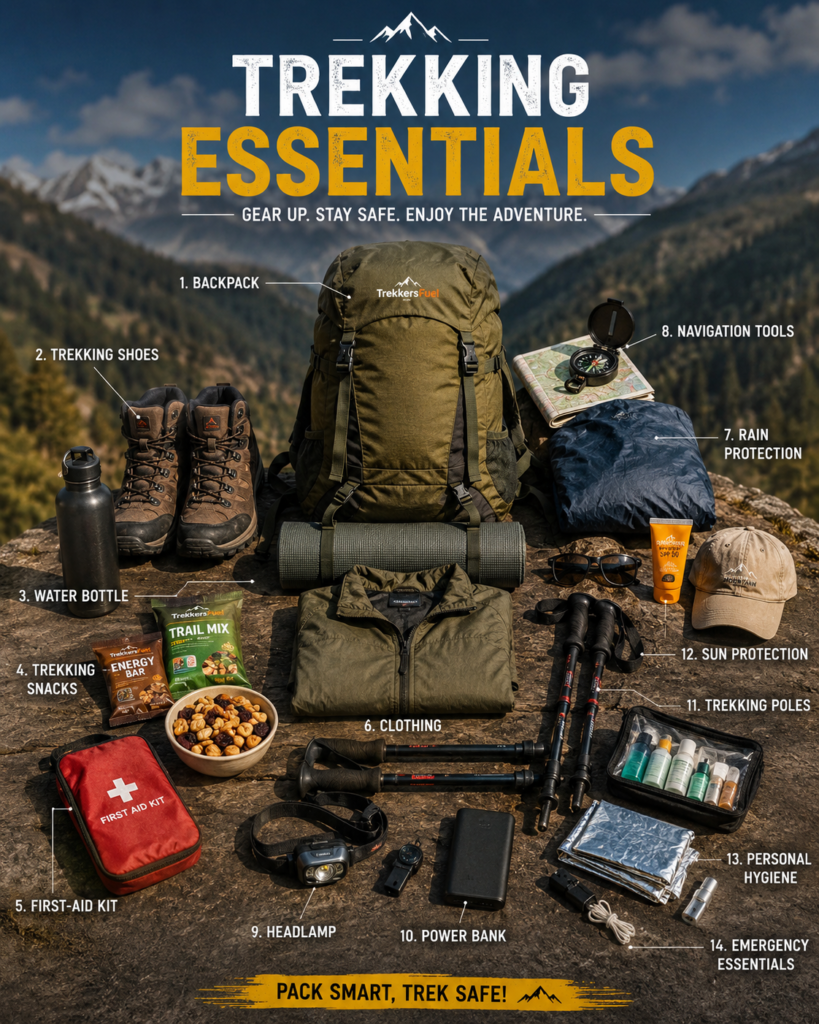
1. Trekking Backpack
A comfortable, durable backpack is one of the most important trekking essentials. Choose a lightweight backpack with enough capacity for your trek. Look for padded shoulder straps, a waist belt, multiple compartments, and rain protection.
2. Trekking Shoes
Good footwear provides grip, stability, and protection on uneven terrain. Choose trekking shoes with a strong sole, ankle support, and comfortable cushioning. Break them in before your trek to avoid blisters.
3. Water Bottle or Hydration System
Staying hydrated is essential during physical activity. Carry a reusable water bottle or hydration bladder and refill it whenever safe drinking-water sources are available.
4. Energy-Rich Trekking Snacks
Long treks require consistent energy. Carry lightweight snacks such as energy bars, trail mix, nuts, dry fruits, and seeds. These provide convenient nutrition without adding too much weight to your backpack.
5. First-Aid Kit
A compact first-aid kit should always be part of your trekking gear. Include basic items such as bandages, antiseptic wipes, gauze, blister protection, and any personal medicines you normally require.
6. Weather-Appropriate Clothing
Mountain weather can change quickly. Carry moisture-wicking base layers, comfortable trekking pants, a warm layer, and a waterproof or windproof jacket according to the destination and season.
7. Rain Protection
Even when the weather forecast looks clear, unexpected rain can occur. A lightweight rain jacket, poncho, and backpack rain cover can help keep you and your belongings dry.
8. Navigation Tools
Never rely entirely on your phone. Carry an offline map, downloaded navigation information, or a physical map when appropriate. A compass can also be useful, particularly on remote trails.
9. Headlamp or Flashlight
A headlamp is a small but extremely useful item. It keeps your hands free while walking in low-light conditions and can be valuable during early-morning starts or unexpected delays.
10. Power Bank
Your smartphone may be useful for navigation, communication, photography, and emergencies. A compact power bank helps keep your devices charged when electricity isn’t available.
11. Trekking Poles
Trekking poles can improve balance and reduce strain on your knees, particularly while descending steep or uneven trails. Adjustable poles are convenient because they can be packed away when not required.
12. Sun Protection
Protect yourself from strong sunlight with sunscreen, sunglasses, and a cap or hat. Sun exposure can become intense at higher altitudes, so don’t underestimate the importance of protection.
13. Personal Hygiene Essentials
Carry lightweight hygiene items such as biodegradable soap, tissues, hand sanitizer, a small towel, and a toothbrush. Remember to follow Leave No Trace principles and avoid littering.
14. Emergency Essentials
Keep a whistle, emergency blanket, basic fire-starting equipment where legally and environmentally appropriate, and a small emergency contact card. Share your trek plan and expected return time with someone you trust.
15. Trekking Snacks & Compact Essentials
Your final packing check should include lightweight food and practical items that make the journey easier. Energy bars, dry fruits, trail mixes, disposable rain protection, and extra socks can be especially useful on longer adventures.
How to Pack Your Trekking Essentials Smartly
Packing efficiently is just as important as choosing the right gear. Keep frequently used items such as water, snacks, sunscreen, and rain protection easily accessible. Place heavier items close to your back and avoid carrying unnecessary items.
Before leaving, check the weather forecast, trail conditions, water availability, and local regulations. Your packing list should always be adjusted according to the trek’s duration, difficulty, altitude, season, and location.
Trekking Essentials Checklist Before You Leave
Before starting your trek, quickly check:
- Backpack and rain cover
- Trekking shoes
- Water and hydration system
- Energy-rich snacks
- First-aid kit
- Weather-appropriate clothing
- Navigation tools
- Headlamp
- Power bank
- Trekking poles
- Sun protection
- Personal hygiene items
- Emergency supplies
Why the Right Trekking Essentials Matter
The right equipment doesn’t guarantee a trouble-free trek, but it can significantly improve preparedness and comfort. Good planning allows you to focus more on the scenery, experience, and adventure instead of worrying about avoidable problems.
Whether you’re exploring a local trail or preparing for a Himalayan adventure, make your packing list before you leave and double-check every trekking essential.
Disclaimer
This blog is intended for general informational purposes only. Trekking essentials conditions, weather, altitude, and trail difficulty can vary significantly. Always research your destination, follow local guidelines, check current weather and trail conditions, and seek professional guidance when necessary. Trekkers should make packing and safety decisions based on their individual requirements and the specific trek.
Ready for Your Next Adventure?
Fuel your journey with reliable trekking essentials and nutritious trail-friendly snacks from TrekkersFuel. From energy-packed snacks to useful trekking supplies, prepare smart and stay ready for the trail.
Explore TrekkersFuel and gear up for your next adventure!